The May birth flowers are the lily of the valley (Convallaria majalis) and the hawthorn (Crataegus). Lily of the valley is a delicate, fragrant perennial ground cover with iconic bell-shaped white flowers that symbolize purity, sweetness, and humility. Hawthorn is a flowering shrub from the rose family (Rosaceae) whose clusters of white, pink, or red blooms represent hope, protection, and renewal. Together, they perfectly capture the spirit of May — soft yet strong, graceful yet rooted in ancient tradition.
What Are the Birth Flowers for May?
May is one of several months that boasts not one but two official birth flowers: the lily of the valley and the hawthorn. This pairing offers a rich balance of beauty and symbolism. While lily of the valley captures the tender, poetic side of spring with its woodland elegance and sweet fragrance, hawthorn brings the resilience and depth of a plant steeped in centuries of Celtic lore, Christian symbolism, and herbal tradition.
The custom of assigning birth month flowers has ancient roots. The tradition likely began in Rome, where flowers were thought to hold spiritual significance and healing properties. It gained enormous popularity during the Victorian era, when floriography — the language of flowers — became a fashionable way to communicate emotions and intentions. Under this system, every bloom carried a specific meaning, and gifting the right flower became an art form. Today, birth flowers serve a similar purpose: a personal, meaningful way to connect with the season of one’s birth.
May Birth Flower #1: Lily of the Valley (Convallaria majalis)
What Is Lily of the Valley?
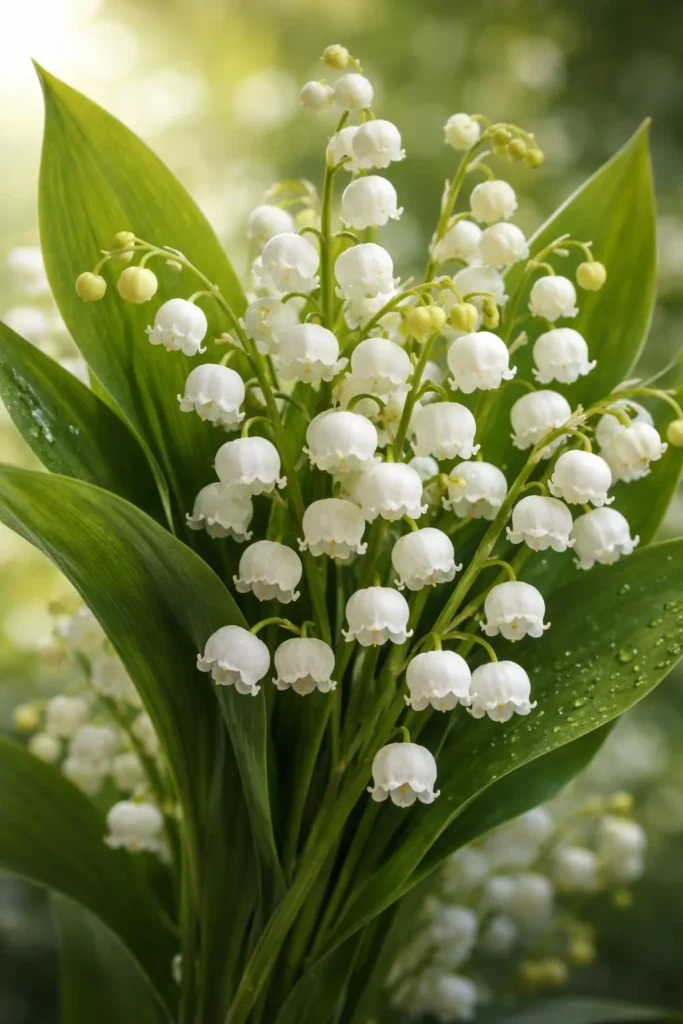
Despite having “lily” in its name, lily of the valley is not a true lily. Botanically classified as Convallaria majalis, it belongs to the asparagus family (Asparagaceae), not the Lilium genus. It is also known by charming common names such as May bells, May lily, and Our Lady’s Tears.
This beloved spring flower is a perennial ground cover native to cool temperate regions of Europe and Asia. It grows just 6–12 inches tall, forming dense, lush colonies through underground rhizomes. The plant produces arching stems adorned with pairs of lance-shaped leaves and rows of nodding, bell-shaped white flowers that emit one of the most recognizable fragrances in the floral world. Its scientific name, Convallaria majalis, literally translates to “valley plant of May” — a name as poetic as the flower itself.
Lily of the valley blooms in mid to late spring, typically peaking in May, which is why it holds such a strong connection to the month.
Lily of the Valley Meaning and Symbolism
In the Victorian language of flowers, lily of the valley was assigned meanings of sweetness and humility — a reflection of its small stature and unassuming beauty. Over centuries and across cultures, this spring flower has accumulated a rich tapestry of symbolic meanings:
Purity and innocence — The flower’s pure white blooms have long been associated with spiritual and moral purity, making it a natural choice for religious ceremonies and celebrations.
Humility — Because the flowers hang downward, as if bowing their heads, many cultures have read in them a spirit of modesty and gentleness.
Happiness and a return to joy — In the Victorian floral tradition, giving lily of the valley meant conveying that the recipient had brought happiness back into the giver’s life. It is a flower that speaks to reunion, healing, and emotional renewal.
Motherhood — Its delicate beauty and nurturing associations have made it a popular Mother’s Day gift and a natural symbol of the bond between mother and child.
Good luck — In France, lily of the valley is synonymous with good fortune. The French tradition of gifting muguet (lily of the valley) on May 1st — known as La Fête du Muguet — dates back to 1561, when King Charles IX received the flower as a lucky charm and began distributing it to the ladies of his court. The custom continues to this day.
Lily of the Valley in Christian Lore and Mythology
Few flowers carry as many spiritual stories as lily of the valley. In Christian symbolism, the flower is often called “Our Lady’s Tears” or “The Tears of the Virgin Mary.” One legend holds that the Virgin Mary shed tears at the crucifixion of Christ, and wherever her tears fell, lily of the valley grew. Another version says the flowers sprouted from the tears of Eve as she was expelled from the Garden of Eden.
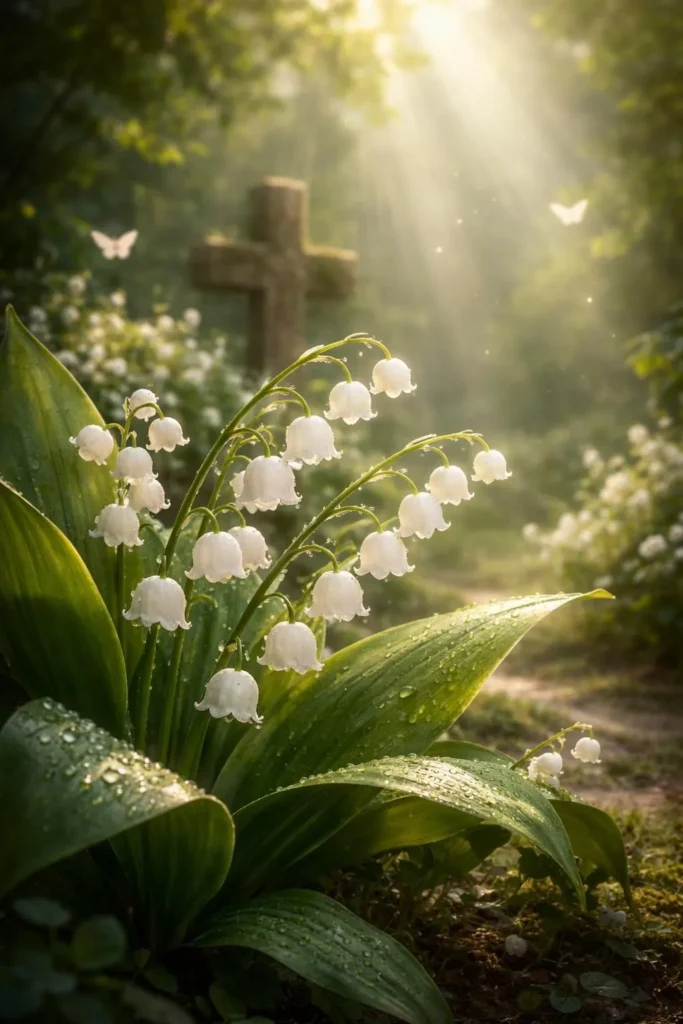
The flower is mentioned several times in the Bible, and it has also been associated with Christ’s Second Coming, representing purity and the hope of a new age.
In Greek mythology, the flower is linked to Apollo, who was said to carpet forest floors with lily of the valley to protect the soft feet of his Muses. In other traditions, the flower was associated with the return of spring and the triumph of light over darkness.
The nightingale in European folklore was said to love lily of the valley so dearly that the bird would not return to the woodland until the flowers were in bloom — a charming image that deepened the flower’s association with romance and seasonal renewal.
Lily of the Valley in Royal Weddings and Pop Culture
One of the most enduring associations of lily of the valley in the modern era is its role in royal and celebrity wedding bouquets. Its delicate beauty, heavenly fragrance, and symbolism of purity and happiness make it an obvious choice for bridal arrangements.

Most famously, Princess Diana carried lily of the valley in her iconic 1981 bridal bouquet, and Kate Middleton did the same at her 2011 wedding to Prince William. Princess Grace of Monaco also featured the bloom in her bouquet, as did Audrey Hepburn and Miranda Kerr. This royal and celebrity association has firmly cemented lily of the valley as one of the most beloved and recognized May birth flower wedding bouquet choices in the world.
Beyond weddings, the flower left its mark on the world of perfumery. The French fragrance house Christian Dior named lily of the valley as his favorite flower, and its scent inspired the creation of the legendary Diorissimo perfume in 1956 — still considered one of the greatest floral fragrances ever created.
Lily of the Valley Around the World
The cultural reach of lily of the valley extends far beyond France. In Serbia, the flower is gathered on St. George’s feast day, and homes are decorated with it to attract good luck and prosperity. In Holland, newlyweds have traditionally planted lily of the valley in their garden as a symbol of luck in marriage. In Helston, England, the blooms are worn during the Furry Dance on May 8th, a centuries-old spring celebration.
Perhaps most significantly, lily of the valley holds the distinction of being the national flower of Finland, where it is called kielo and represents the unspoiled purity of Finnish nature.
In America, Thomas Jefferson documented lily of the valley as one of the hardy perennials cultivated at his home Monticello, and the American variety (Convallaria pseudomajalis) is considered the Missouri state flower.
How to Grow Lily of the Valley
Lily of the valley is surprisingly easy to grow and remarkably resilient. Here are the key facts for gardeners:
Hardiness zones: USDA Zones 2–7, making it one of the hardiest of all spring-blooming perennials.
Light: Prefers partial to full shade. It is one of the few flowering plants that thrives in deeply shaded woodland gardens.
Soil: Well-draining, fertile, and consistently moist soil is ideal. It tolerates a range of soil types but dislikes waterlogged conditions.
Planting: Best planted from pips (rhizomes) in autumn or early spring. Space them about 6 inches apart to allow the colony to fill in naturally.
Spreading habit: Lily of the valley can spread aggressively once established, so it is best planted where it can naturalize freely — such as beneath trees or along shaded borders — or contained in pots.
Toxicity: All parts of the plant are highly toxic to humans, dogs, cats, and other animals. The plant contains cardiac glycosides that can cause nausea, low blood pressure, irregular heartbeat, and in severe cases, death. It should always be kept away from children and pets.
Vase life: As a cut flower, lily of the valley lasts approximately 6–10 days. Stems should be cut at an angle and kept in cool, clean water away from direct sunlight.
May Birth Flower #2: Hawthorn (Crataegus)
What Is Hawthorn?
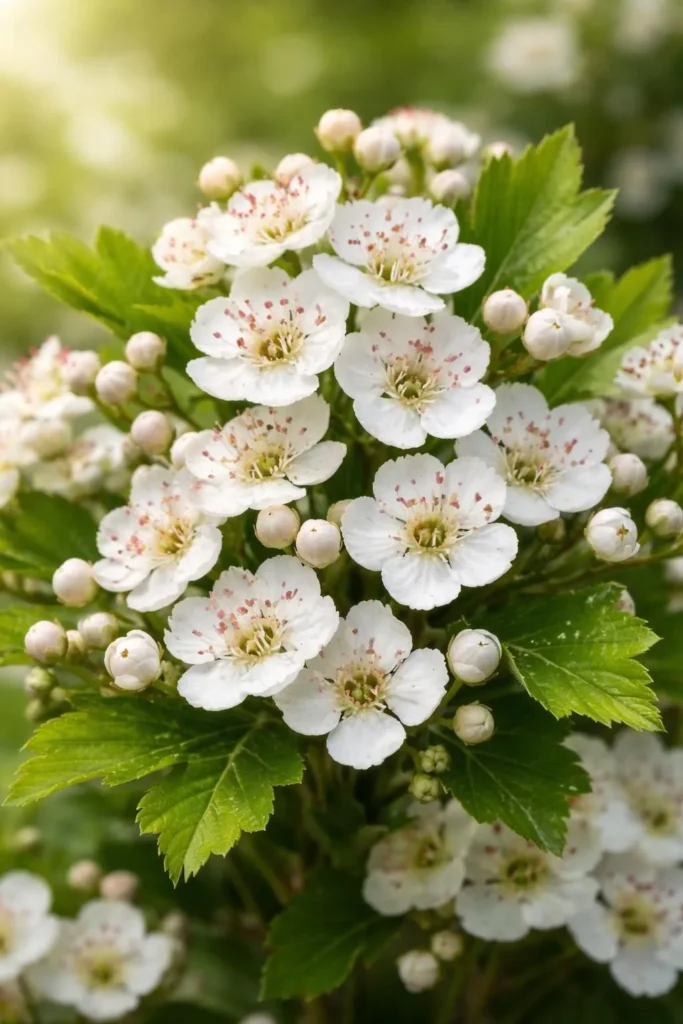
Hawthorn belongs to the genus Crataegus and is a deciduous shrub or small tree in the rose family (Rosaceae). It is sometimes called the “May Tree” precisely because its flowers bloom in May. With hundreds of species distributed across temperate regions of Europe, Asia, and North America, hawthorn has one of the most extensive ranges of any flowering shrub in the world.
The plant is easily recognized by its lobed, dark green leaves, sharp thorns, and clusters of small, five-petaled flowers that closely resemble apple and pear blossoms — fitting, given their shared family. The blooms are most commonly white but can also appear in pink or red, each carrying its own symbolic meaning. After the flowers fade, hawthorn produces small, round berries known as haws, which ripen to a deep red in autumn and are beloved by birds and wildlife.
Hawthorn typically grows 15–30 feet tall and is hardy in USDA Zones 4–8. It is often used as a flowering hedge and is valued for its dense, thorny growth, which provides exceptional wildlife habitat and natural security barriers.
Hawthorn Flower Symbolism and History
Few plants in the Western world carry as much symbolic weight as hawthorn. Its meanings are layered and sometimes contradictory — a reflection of how deeply embedded it is in the cultures that have lived alongside it for millennia.
Hope — The hawthorn is perhaps most universally recognized as a symbol of hope. Its flowers appear after the last frosts of winter, signaling with certainty that warmth and growth are on their way.
Protection — Hawthorn’s thorns have long made it a symbol of protective strength. In many cultures, hawthorn hedges were planted around homes and sacred sites to ward off evil spirits and harmful forces.
Love and fertility — In ancient Greece, hawthorn flowers were used to adorn newlyweds, and the plant has been associated with love, marriage, and fertility across numerous traditions. The fact that hawthorn can simultaneously bear flowers, leaves, and berries has made it a symbol of abundance and generational continuity.
New beginnings — Because hawthorn blooms at the turn from spring to summer, it is strongly associated with transitions, fresh starts, and the renewal of the natural cycle.
Color symbolism: White hawthorn blossoms represent purity and protection; red blooms suggest passion and strength; pink flowers carry meanings of harmony and balance.
Hawthorn and May Day Traditions
The connection between hawthorn and May Day is ancient and deeply rooted in Celtic lore. The Celtic festival of Beltane — celebrated on May 1st — marked the beginning of summer and was one of the most important points in the agricultural calendar. Hawthorn played a central role in these celebrations. Its branches were hung over doors and woven into garlands to welcome the season, invite good fortune, and honor the power of the natural world.
In many parts of Britain and Ireland, it was considered deeply unlucky to cut down a hawthorn tree, particularly an old one growing alone in a field. Such trees were known as “faerie trees” — believed to be gathering points for the fairy folk and liminal portals between the human world and the realm of faeries. Along with oak and ash, hawthorn was said to form the sacred trio of trees that offered passage into the Faerie realm. Disturbing such a tree was thought to invite misfortune, illness, and disaster.
The Maypole tradition, central to May Day celebrations across Europe, was often decorated with hawthorn blossoms, reinforcing the flower’s status as the living emblem of the season.
Hawthorn in Christian Symbolism
Despite its pagan associations, hawthorn was readily absorbed into Christian symbolism. The most famous legend links hawthorn to the Holy Thorn of Glastonbury in England. According to tradition, Joseph of Arimathea traveled to Glastonbury after the crucifixion, and when he thrust his hawthorn staff into the ground, it miraculously took root and bloomed — twice a year, at Christmas and at Easter. The descendants of this original tree, known as Crataegus monogyna ‘Biflora’, can still be found in Glastonbury today.
This association made hawthorn a symbol of sacred protection and divine presence within the Christian tradition.
Hawthorn as a Medicinal Plant
Beyond its cultural symbolism, hawthorn has a long history as a medicinal plant. Herbalists across Europe and Asia have used various parts of the plant — flowers, leaves, and hawthorn berries (haws) — for centuries to support cardiovascular health. Modern herbalism and some clinical research have explored hawthorn extract as a supplement for heart health, particularly for improving circulation and managing mild heart-related conditions.
Are hawthorn berries edible? Yes — hawthorn berries can be eaten fresh, though they have a somewhat bland, mealy taste. They are more commonly processed into jellies, jams, sauces, wines, and teas. Haws are high in antioxidants and have a mild, apple-like flavor that develops more complexity when cooked.
It is worth noting that hawthorn seeds (the pits inside the berries) contain cyanogenic compounds and should not be consumed. The berries themselves are generally considered safe for adults in culinary quantities, but should not be given to young children.
Lily of the Valley vs. Hawthorn: A Quick Comparison
| Feature | Lily of the Valley | Hawthorn |
|---|---|---|
| Scientific Name | Convallaria majalis | Crataegus spp. |
| Plant Family | Asparagaceae | Rosaceae |
| Plant Type | Perennial ground cover | Flowering shrub / small tree |
| Flower Color | White | White, pink, red |
| Bloom Time | Mid to late spring | Late spring (May) |
| Fragrance | Sweet, iconic | Musky (some find unpleasant) |
| Key Symbolism | Purity, humility, happiness | Hope, protection, love |
| Folklore | Christian tears, Viking legends | Celtic faerie tree, Beltane |
| Toxicity | Highly toxic (all parts) | Berries edible; seeds toxic |
| Notable Uses | Bridal bouquets, perfume | Herbal medicine, hedging, jams |
May Birth Flowers in Wedding Bouquets
Both May birth flowers have strong connections to weddings and romance, making them especially meaningful choices for spring celebrations.

Lily of the valley has been a bridal staple for centuries. Its symbolism of purity, happiness, and good luck aligns perfectly with the spirit of a wedding day. Its appearance in the bouquets of Princess Diana, Kate Middleton, Grace Kelly, and Audrey Hepburn has made it practically synonymous with timeless bridal elegance.
Hawthorn has its own long history in wedding traditions, particularly in Celtic and Greek cultures where its flowers were woven into bridal garlands and crowns as symbols of love, fertility, and blessings for the new union.
For a truly meaningful May birth flower wedding bouquet, combining both flowers — the delicate white bells of lily of the valley with sprigs of hawthorn blossom — creates an arrangement rich in beauty, fragrance, and historical depth.
How to Use May Birth Flowers as Gifts
If you are looking for a meaningful gift for someone born in May, these spring flowers offer many creative possibilities:
A potted lily of the valley is a living gift that returns each spring, making it a lasting symbol of the relationship. A hawthorn tree sapling makes a powerful statement about growth, strength, and protection. Floral jewelry or pressed flower keepsakes featuring lily of the valley or hawthorn are thoughtful alternatives for those who prefer lasting mementos over fresh blooms. A bouquet combining both flowers alongside complementary spring blooms such as peonies, tulips, or irises creates a stunning, season-appropriate arrangement full of symbolism.
Frequently Asked Questions About May Birth Flowers
What are the two birth flowers for May? The two May birth flowers are lily of the valley (Convallaria majalis) and hawthorn (Crataegus). Lily of the valley symbolizes purity, humility, and happiness, while hawthorn represents hope, protection, and love.
What does lily of the valley mean as a birth flower? As a May birth flower, lily of the valley carries meanings of sweetness, purity, humility, motherhood, and a return to happiness. It is associated with good luck, renewal, and new beginnings — all themes that resonate with the spirit of spring.
What does hawthorn symbolize? Hawthorn symbolizes hope, protection, love, and fertility. It is deeply connected to May Day traditions, Celtic mythology, and Christian symbolism. Its thorns represent protective strength, while its blossoms signal the arrival of summer and new beginnings.
Is lily of the valley poisonous? Yes. All parts of the lily of the valley plant — including the flowers, leaves, stems, berries, and roots — are highly toxic to humans and animals. The plant contains cardiac glycosides that can cause serious health effects. It should always be kept away from children and pets.
Are hawthorn berries edible? Yes, hawthorn berries (haws) are edible and are commonly used to make jellies, jams, wines, and herbal teas. The seeds inside the berries, however, contain cyanogenic compounds and should not be eaten.
Why does lily of the valley appear in royal wedding bouquets? Lily of the valley is a popular choice for royal bridal bouquets because of its symbolism of purity, happiness, and good luck, combined with its exquisite fragrance and delicate beauty. Princess Diana, Kate Middleton, and Princess Grace of Monaco all carried it on their wedding days.
What is the national flower of Finland? Lily of the valley (Convallaria majalis, known in Finnish as kielo) is the national flower of Finland.
How do I grow lily of the valley in my garden? Lily of the valley grows best in partial to full shade, in moist, well-draining soil. Plant rhizomes (pips) in autumn or early spring in USDA Zones 2–7. It spreads vigorously once established and is ideal as a ground cover under trees or along shaded borders. All parts are toxic, so handle with care and keep away from children and pets.
What is the connection between hawthorn and May Day? In Celtic tradition, hawthorn was central to the festival of Beltane (May Day), marking the beginning of summer. Its branches were used to decorate homes and celebrations as symbols of hope, fertility, and good fortune. In British folklore, solitary hawthorn trees were considered sacred “faerie trees,” and cutting them down was thought to bring terrible misfortune.
Can lily of the valley be used in perfume? Yes. Lily of the valley has one of the most beloved fragrances in perfumery. Christian Dior’s famous Diorissimo perfume (1956) was inspired by his love of this flower. The French word muguet is widely used in the perfume industry to describe the scent profile associated with lily of the valley.
What flowers go well with May birth flowers in a bouquet? Lily of the valley and hawthorn pair beautifully with peonies (good fortune), tulips (love and confidence), irises (faith and wisdom), roses (timeless love), and daisies (cheerfulness). Together, these spring blooms create lush, meaningful bouquets perfect for May birthdays, weddings, and celebrations.
Final Thoughts on May Birth Flowers
The May birth flowers — lily of the valley and hawthorn — are far more than seasonal blooms. They are living links to centuries of human story: to the tears of the Virgin Mary and the rites of the Celtic spring, to royal wedding chapels and woodland folklore, to the perfumeries of Paris and the hillsides of Finland. One is soft and fragrant, a whisper of grace; the other is bold and thorned, a declaration of endurance.
Together, they embody everything May represents: renewal and hope, beauty and strength, tenderness and deep roots. Whether you are celebrating a May birthday, planning a spring wedding, or simply cultivating a garden that honors the season, there is no more meaningful flower combination to guide you than these two timeless blooms.