Bring vibrant color and fresh life into your home during winter with indoor flowers that actually thrive in low-light conditions. Below are 10 indoor winter flowers that thrive in low light for beginners, selected for their resilience, minimal care requirements, and ability to flourish in darker spaces where most plants struggle. Whether you’re dealing with limited natural light or simply want foolproof plants for your living room, these winter bloomers deliver consistent beauty without demanding special care. Each flower on this list grows happily indoors and requires only basic attention to reward you with stunning blooms throughout the winter months.
Poinsettias for Festive Color Impact
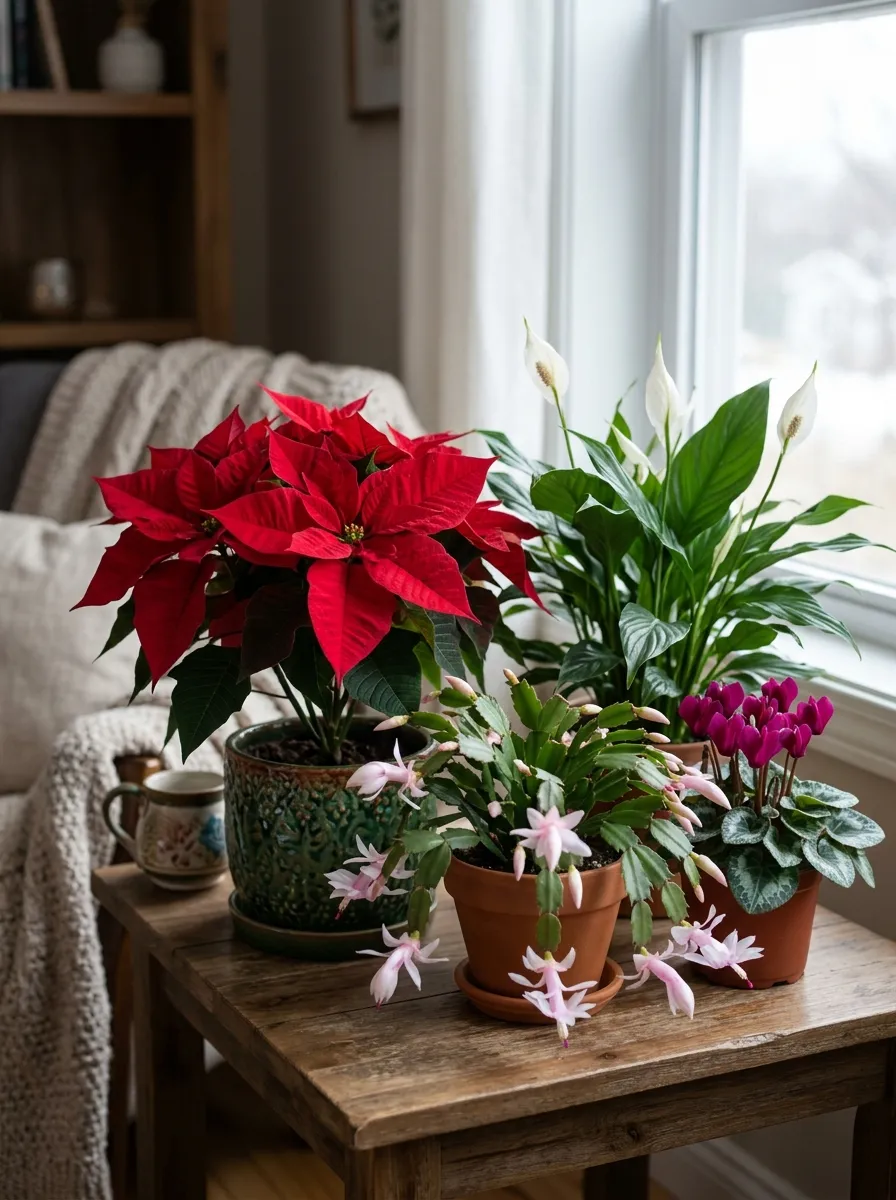
Poinsettias are iconic winter flowers that adapt beautifully to low-light indoor environments while delivering spectacular color. These plants need moderate watering and prefer to dry out slightly between waterings to prevent root issues. Place your poinsettia in indirect light away from heating vents, which can cause premature leaf drop and reduce bloom longevity significantly.
Watering Schedule: Water thoroughly when the top inch of soil feels dry, allowing excess water to drain freely from the pot completely.
Light Placement: Position poinsettias in bright indirect light or even east-facing windows where morning light reaches gently without intense afternoon heat.
Amaryllis Blooms for Dramatic Height
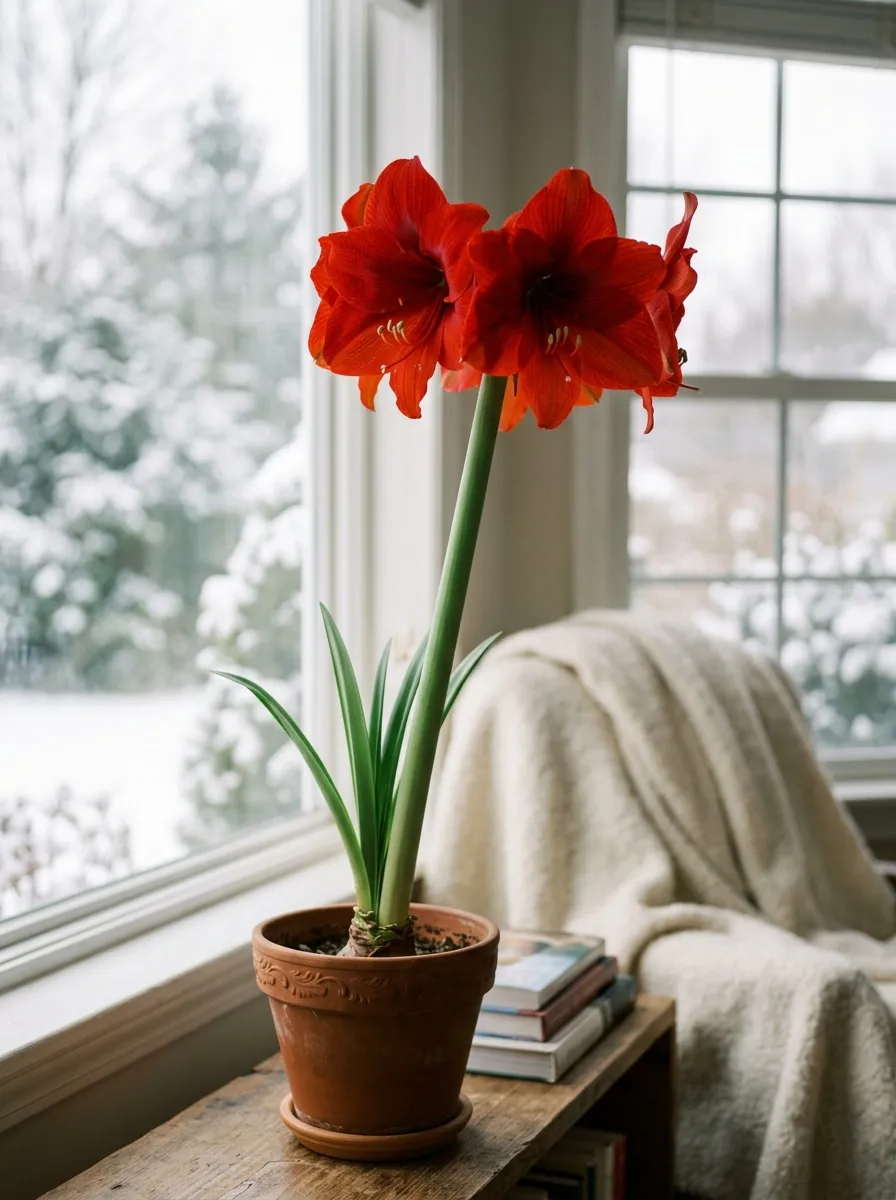
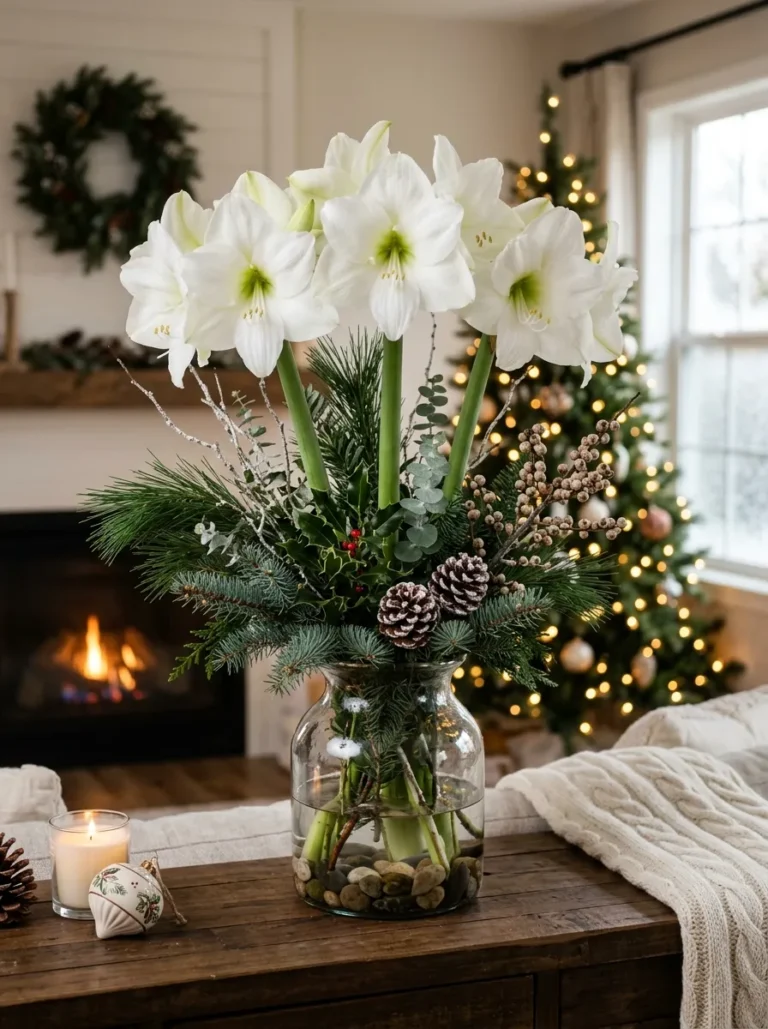
Amaryllis flowers produce tall, trumpet-shaped blooms that make dramatic statements even in dim interior spaces. These bulbs require minimal preparation beyond planting in well-draining soil and providing occasional water. Once flowering begins, enjoy weeks of stunning blooms in reds, pinks, whites, or bi-color combinations that brighten any corner beautifully.
Bulb Planting: Plant bulbs with the top third exposed above soil level, leaving room for roots and proper water drainage throughout growth.
Bloom Duration: Rotate your amaryllis plant weekly to ensure even growth and prevent the stems from leaning toward available light sources naturally.
Paperwhites for Sweet Fragrance
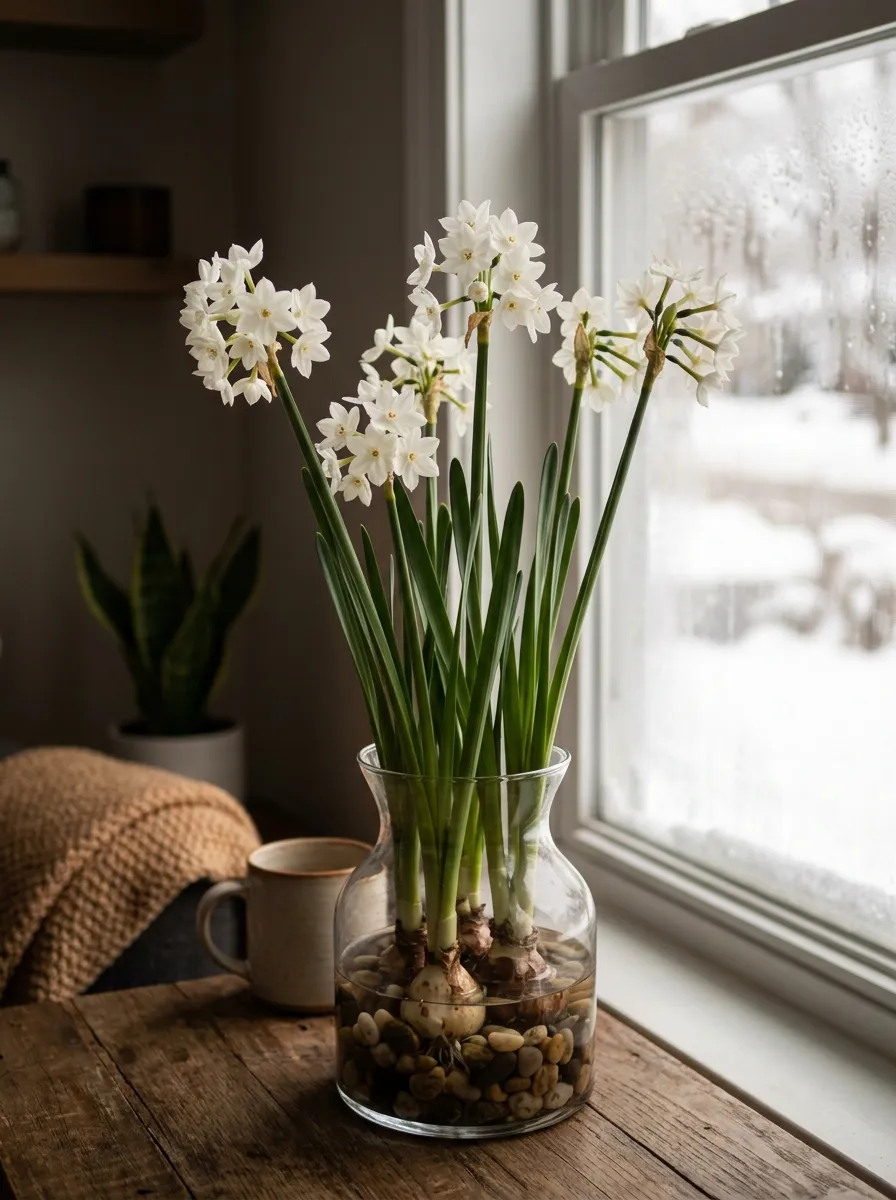
Paperwhites deliver delicate, fragrant flowers that bloom reliably even in offices with minimal natural light. These bulbs flower without soil, sprouting roots in water and gravel or decorative pebbles for added visual appeal. Simply place bulbs in shallow containers, add stones to support stems, and maintain water levels for effortless blooms that last several weeks indoors.
Water-Only Growing: Change water every few days to prevent bacterial growth and keep roots healthy throughout the blooming period.
Scent Intensity: Enjoy powerful fragrance with minimal care; these cheerful flowers perfume entire rooms without artificial air fresheners needed.
Cyclamen for Winter Garden Feel
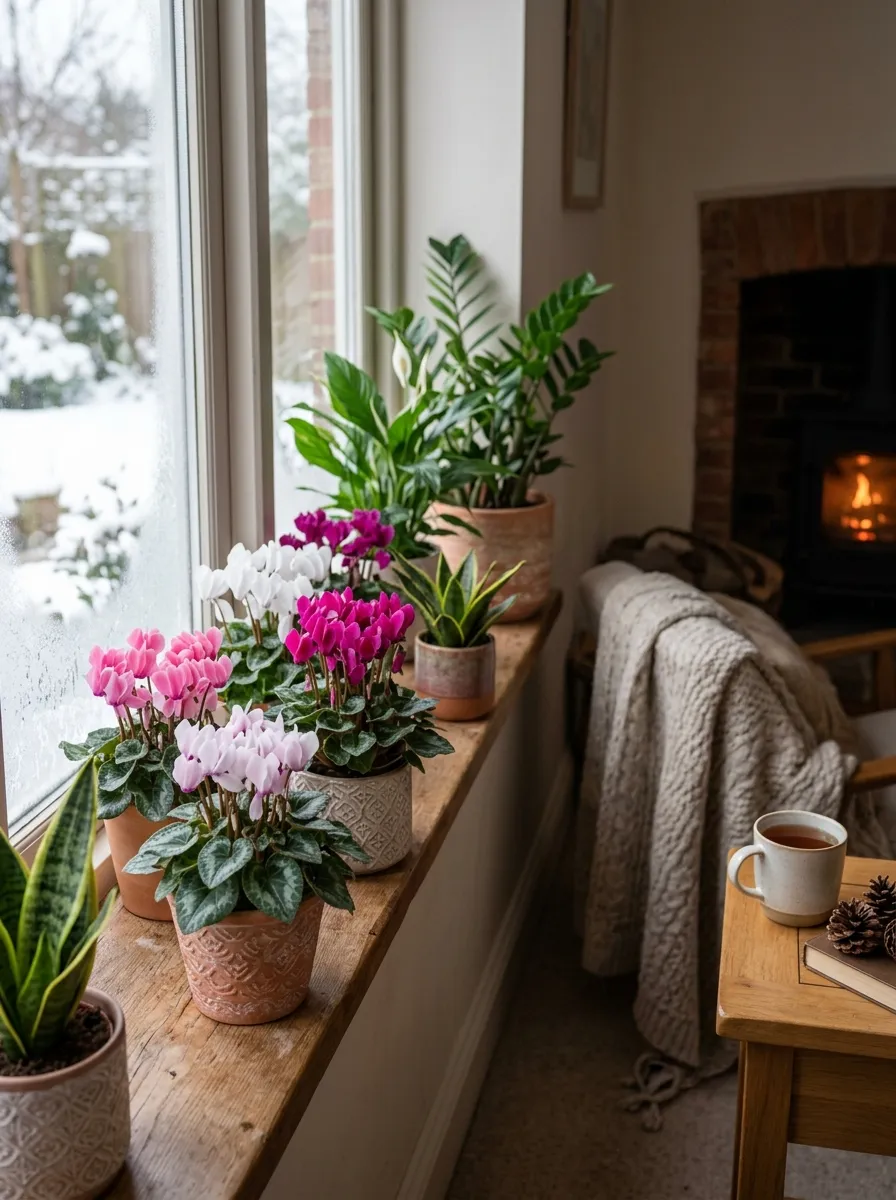
Cyclamen plants produce unique nodding blooms in pink, red, or white that flutter like butterflies above heart-shaped foliage. These shade-tolerant plants prefer cooler temperatures and moderate humidity, making them perfect for bedrooms and living rooms far from sunny windowsills. Water from below by placing pots in shallow water dishes rather than watering from above to prevent crown rot and leaf damage.
Humidity Boost: Group cyclamen with other plants or place on pebble trays with water to create increased humidity they naturally prefer.
Cool Temperatures: Keep room temperatures between 60-70°F where cyclamen thrive beautifully and bloom more prolifically.
Hellebores for Extended Blooming
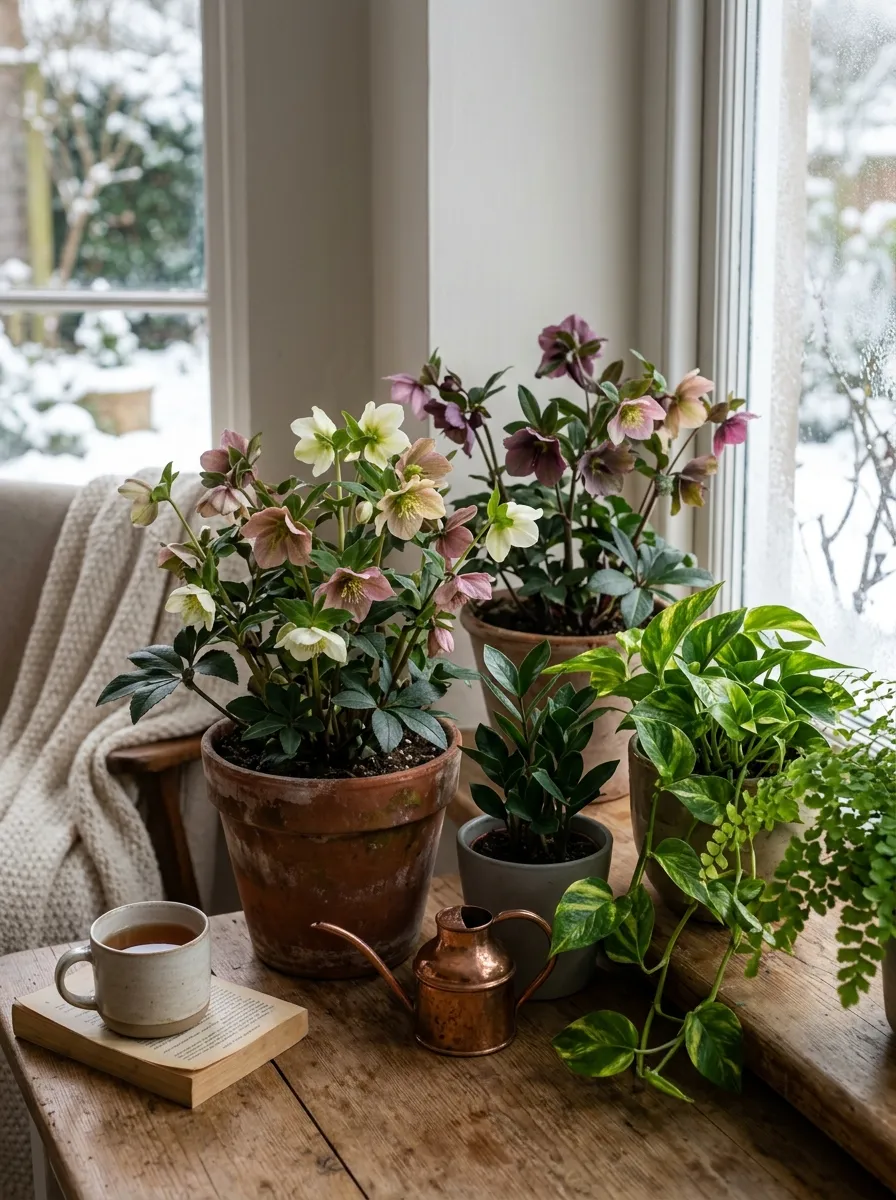
Hellebores, also called Christmas roses, produce nodding clusters of flowers that persist for months through winter months. These shade-loving plants develop sturdy stems and leathery foliage that looks attractive even when not blooming. Hellebores prefer consistently moist soil and cooler temperatures, making them ideal for entryways, bathrooms, or shaded corners where other plants fail.
Soil Moisture: Keep soil evenly moist but not waterlogged; hellebores dislike dry conditions and may drop buds if stressed by drought.
Minimal Fertilizing: These low-demand plants need little supplemental feeding; annual mulch addition provides sufficient nutrients for healthy growth.
African Violets for Velvety Petals
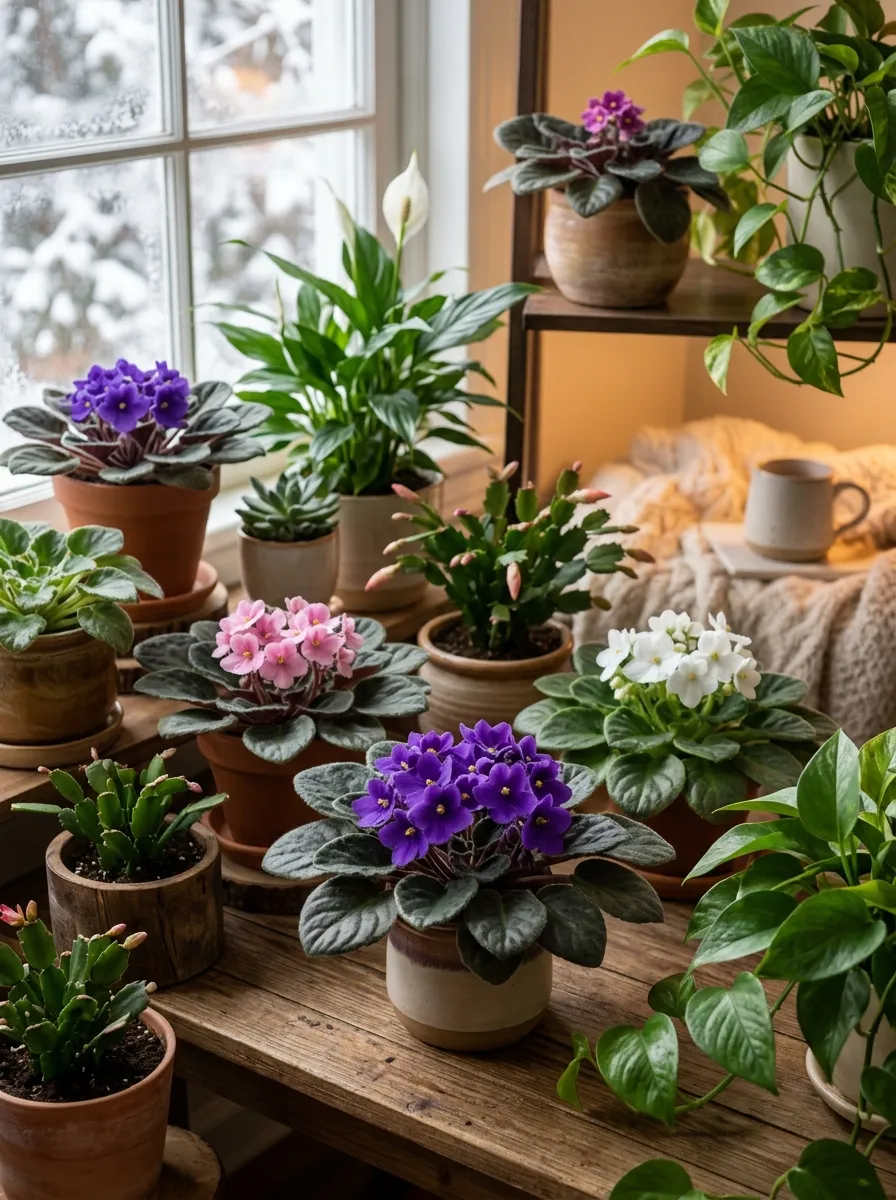
African violets bloom prolifically in low-light conditions and even tolerate fluorescent office lighting remarkably well. These fuzzy-leaved plants produce cheerful flowers in purple, pink, red, or white throughout winter and beyond. Water from below by setting pots on water-filled saucers rather than wetting foliage, which causes spotting and potential disease problems.
Avoid Wet Leaves: Never mist African violets or water directly on foliage; instead, use wick watering or saucer methods exclusively.
Consistent Warmth: Maintain room temperatures around 65-75°F away from cold drafts near windows or exterior walls.
Begonias for Delicate Elegance
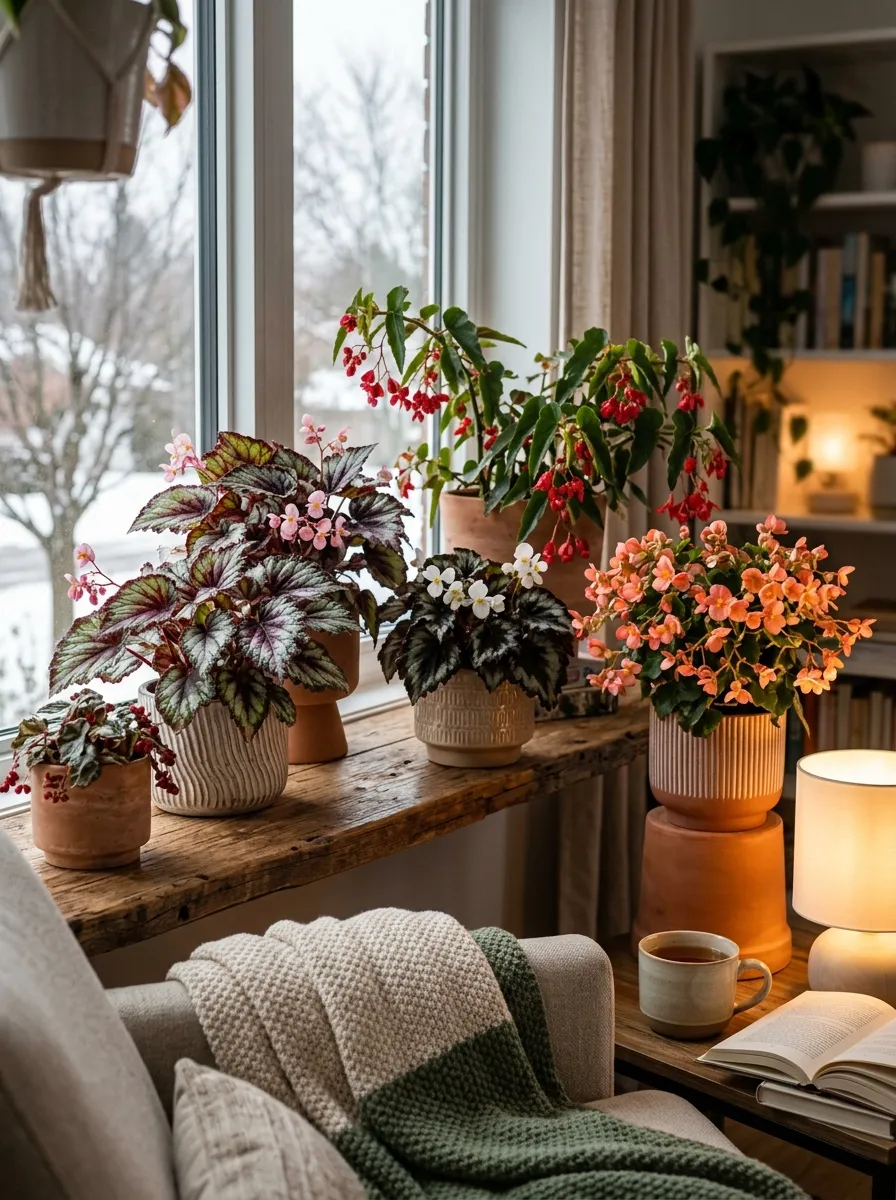
Begonias produce delicate, waxy flowers in shades ranging from soft pink to deep red. Wax begonias particularly excel in low-light indoor environments while maintaining glossy foliage and cheerful blooms. These plants prefer slightly moist soil and appreciate humidity but don’t require the constant attention that some flowering plants demand.
Humidity Preference: Mist begonias gently or place near humidifiers to maintain optimal moisture levels in surrounding air.
Pruning Benefits: Pinch back stem tips occasionally to encourage bushier growth and more prolific flowering throughout winter months.
Gardenia for Fragrant Elegance
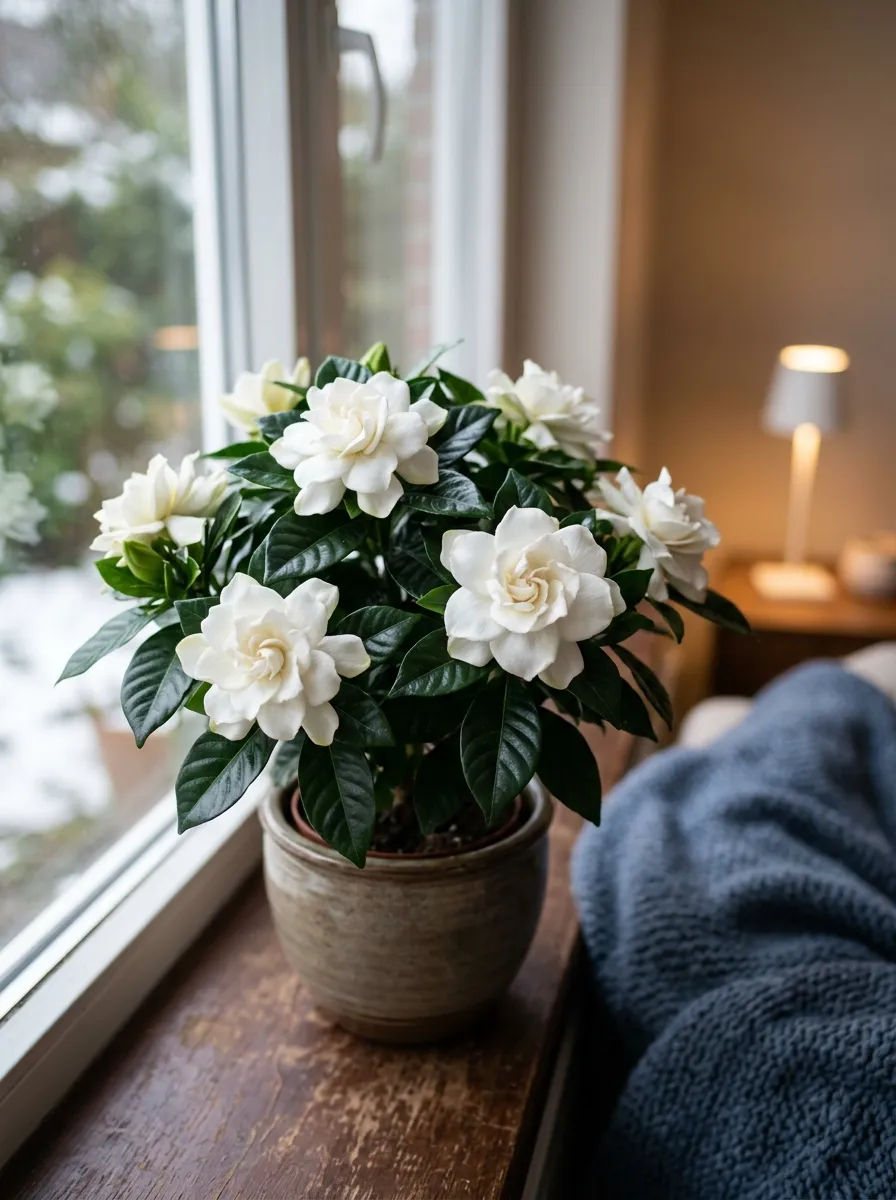
Gardenias produce creamy white, intensely fragrant flowers that bring luxury to dim indoor spaces. These finicky plants reward careful attention with spectacular blooms and gorgeous evergreen foliage year-round. Place gardenias in bright indirect light and maintain consistent moisture without waterlogging for best results and healthiest growth patterns.
Acidic Soil Requirement: Use peat-based potting mix specifically formulated for acid-loving plants like gardenias.
Fragrance Peak: Gardenias bloom most prolifically and fragrantly when temperatures hover around 65-75°F during daylight hours.
Kalanchoe for Succulent Blooms
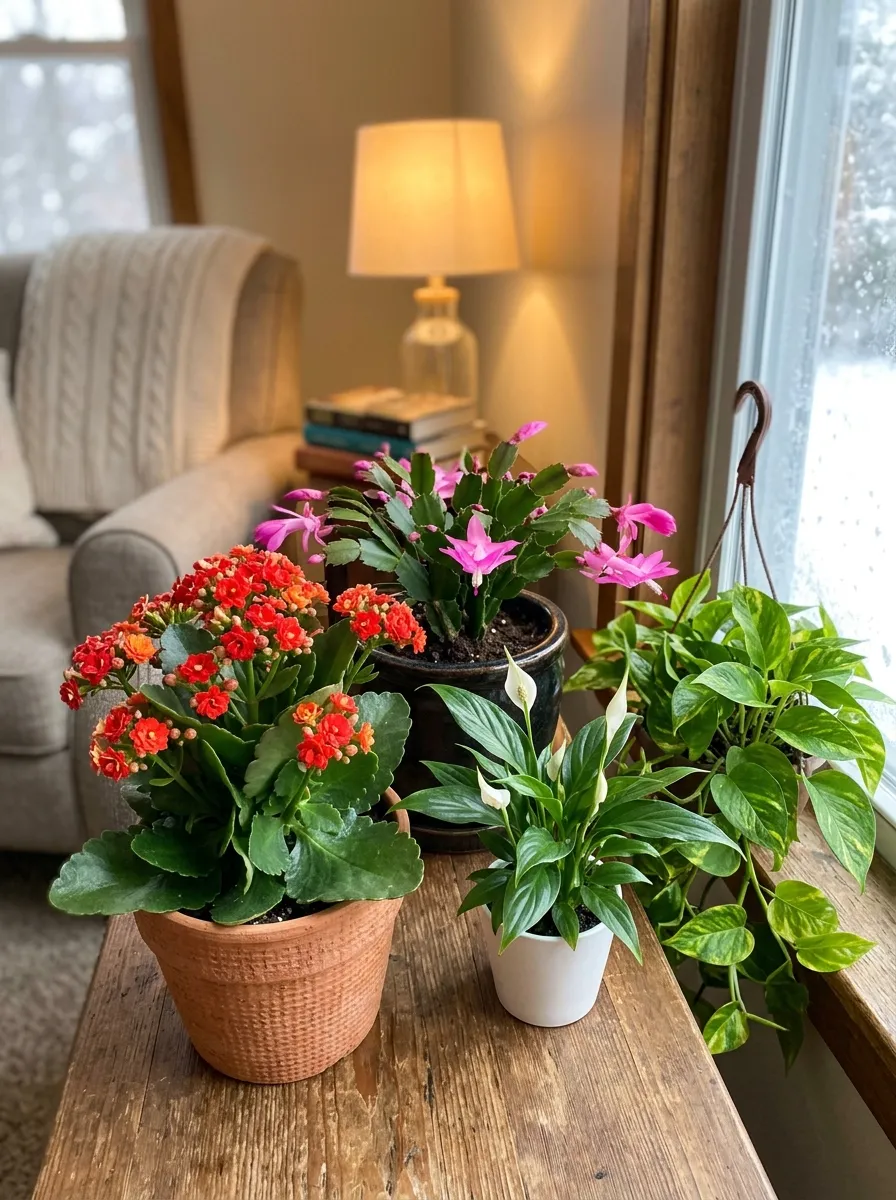
Kalanchoe flowers brighten low-light spaces with clusters of tiny, colorful blooms in red, pink, yellow, or orange. These succulent-type plants tolerate neglect and irregular watering better than most flowering plants. Allow soil to dry between waterings since kalanchoe plants store water in their leaves and dislike consistently moist conditions.
Minimal Watering: Water thoroughly but infrequently; kalanchoes actually thrive on neglect and suffer from excessive moisture more than drought.
Long Bloom Time: Expect months of continuous flowering if temperatures stay moderate and lighting remains consistent throughout season.
Peace Lilies for Graceful White Flowers
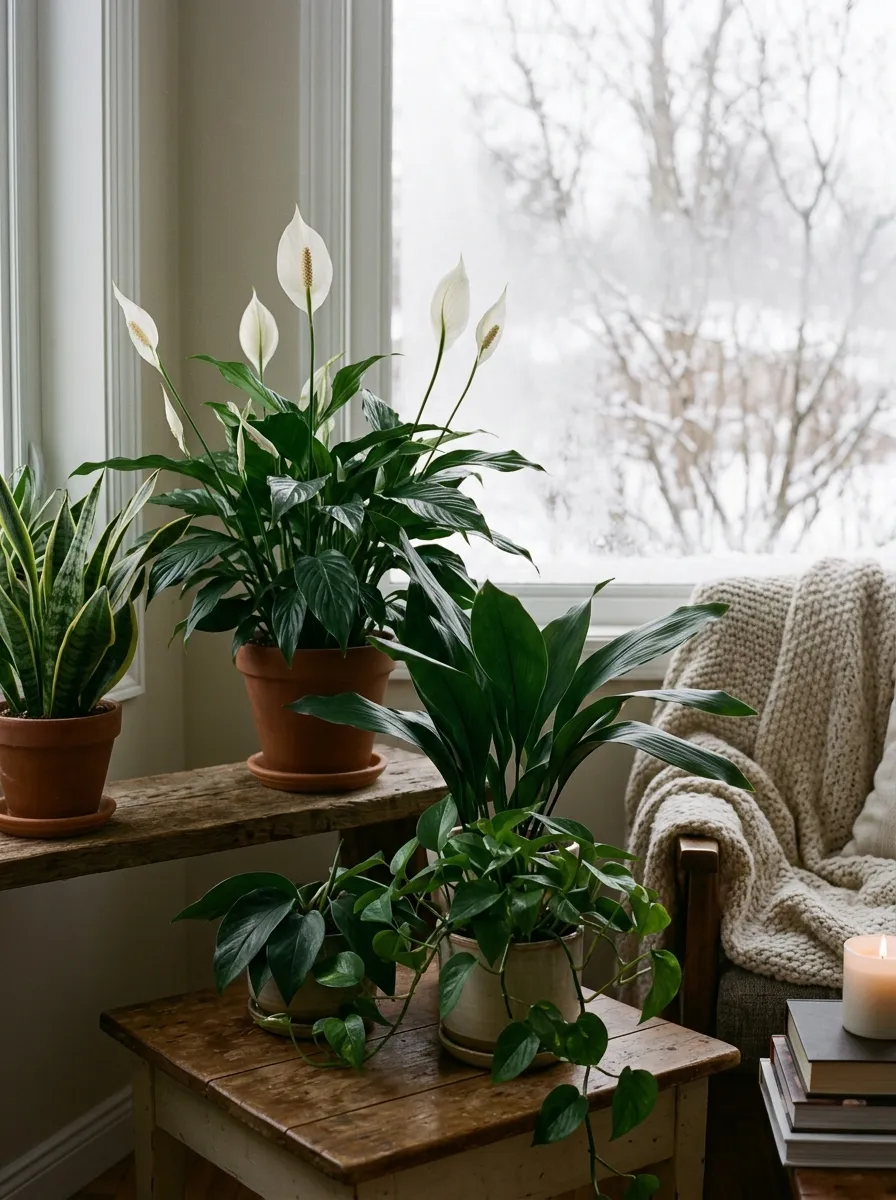
Peace lilies produce elegant white spathe flowers that look almost artificial in their perfection while thriving beautifully in low-light areas. These shade-tolerant plants filter air pollutants while providing visual interest and graceful, arching foliage. Water when soil surface feels dry to the touch, and the plant will visibly droop when thirsty, making watering intuitive even for beginners.
Self-Signaling Moisture: Peace lilies dramatically droop when thirsty and quickly revive after watering, eliminating guesswork from plant care.
Air Purifying Bonus: These plants naturally filter common indoor air pollutants while producing beautiful long-lasting flowers.
Orchids for Exotic Beauty
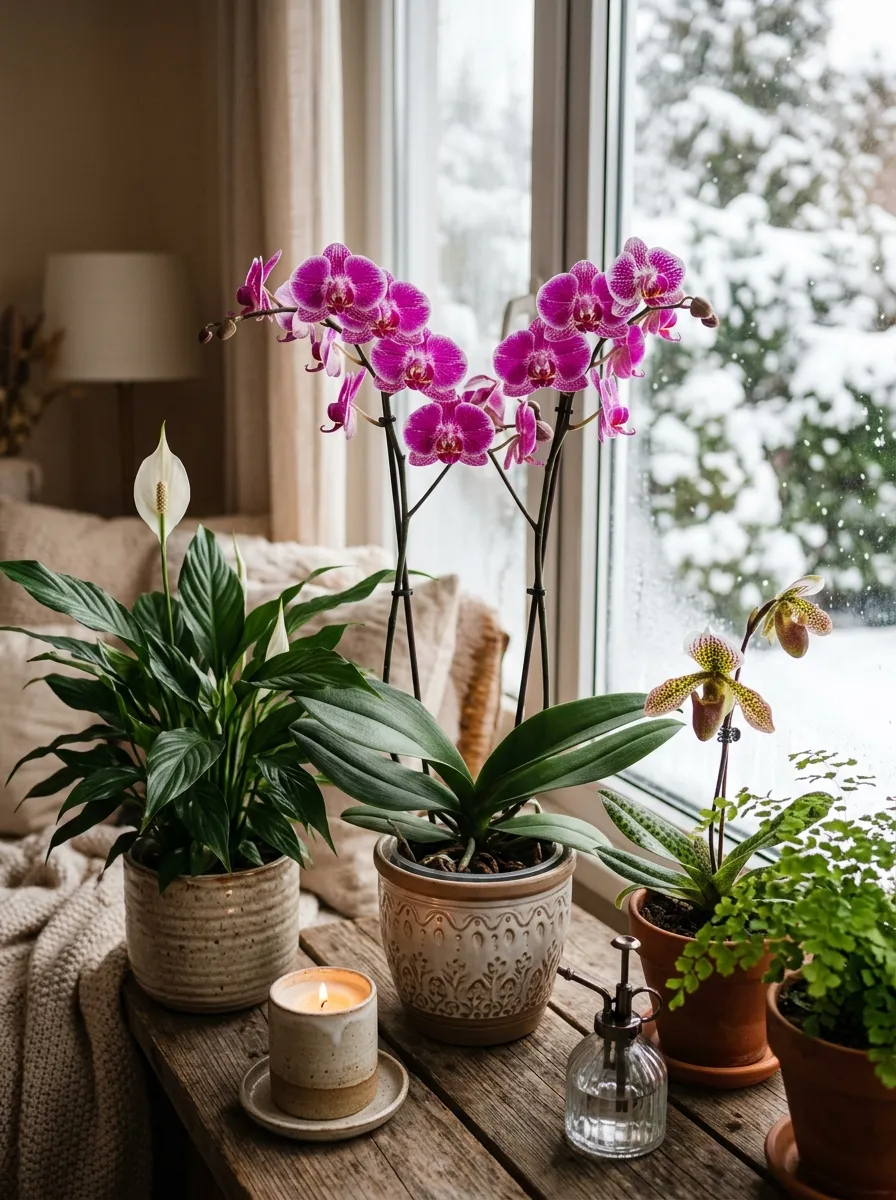
Orchids come in varieties that bloom reliably indoors with minimal light and care, contrary to their exotic reputation. Many orchids tolerate low-light conditions better than people expect, particularly Phalaenopsis varieties. Water weekly by soaking roots briefly and allowing drainage; orchids detest standing water but appreciate humidity and gentle handling.
Light Adaptation: Orchids bloom in east-facing windows or under grow lights; they actually prefer less intense light than direct sun.
Humidity Appreciation: Orchids thrive when grouped with other plants or placed on pebble-filled water trays that increase surrounding humidity naturally.
Frequently Asked Questions
What are the best indoor winter flowers for extremely low-light rooms? Peace lilies, African violets, and poinsettias top the list for extreme low-light tolerance. These plants survive and flower in office cubicles, bathrooms, and interior rooms with minimal natural light, making them perfect for challenging spaces where other plants consistently fail.
How often should I water indoor winter flowers during cold months? Watering needs decrease in winter when plants grow more slowly and transpiration rates drop significantly. Check soil moisture before watering; most plants need water only when the top inch of soil feels dry to your touch.
Can indoor winter flowers survive in rooms with no windows? Many can, especially under LED or fluorescent grow lights that provide supplemental lighting. Peace lilies, African violets, and begonias adapt well to artificial lighting and bloom reliably without any natural sunlight in interior spaces.
Why are my poinsettia leaves dropping so quickly? Rapid leaf drop typically indicates temperature stress from cold drafts, inconsistent watering, or nearby heating vents. Keep poinsettias away from windows on cold nights and maintain moderate temperatures away from heat sources and air conditioning vents.
Do indoor winter flowers need special fertilizer or nutrients? Most winter-blooming houseplants need diluted fertilizer only during active growth and blooming periods. Reduce feeding frequency by half during winter months when plant growth naturally slows significantly.
How long do indoor winter flowers typically bloom indoors? Bloom duration varies widely; poinsettias last weeks to months while paperwhites and amaryllis bloom for three to four weeks. Begonias and African violets provide continuous flowers for months or even years with proper care and attention.
Transform Your Winter Spaces Into Blooming Gardens
Indoor winter flowers create magical transformations in spaces that feel dark and dreary during cold months. These beginner-friendly plants prove that beautiful blooms don’t require expert knowledge, special equipment, or perfect growing conditions. Whether you’re decorating a home office, brightening a basement bathroom, or adding color to a dim corner, these low-light flowering plants deliver consistent beauty and joy. Each variety offers unique characteristics, ensuring you’ll find perfect options for your specific space and lifestyle requirements.
Create a Year-Round Indoor Flowering Paradise
Building a collection of low-light flowering plants lets you enjoy continuous blooms throughout winter and beyond. Rotate plants seasonally, refresh soil annually, and expand your collection as your confidence grows. Your home transforms into a vibrant, colorful sanctuary where depression-fighting natural beauty surrounds you daily. Indoor flowers prove that winter darkness doesn’t mean sacrificing natural beauty or indoor plant success.
Winter Blooming Bliss Awaits You
Growing indoor winter flowers in low-light conditions shatters the myth that dark homes can’t support beautiful flowering plants. Start with one or two beginner-friendly varieties like African violets or peace lilies, then gradually expand as you gain experience and confidence. Your effort pays dividends through months of color, fragrance, and natural beauty that brightens even the gloomiest winter days. Embrace the challenge of low-light growing and discover how rewarding indoor winter gardening truly becomes when you choose the right flower varieties for your unique space.